Promoting best practice for gerbil care and welfare
Cleaning and setting up your Gerbil Tank
With a correctly sized setup (see our Housing section Which Gerbilarium? Which Gerbil Tank? ), your Gerbils will only need a full tank clean every 8-12 weeks depending on their tank size. Some websites say to clean them every week which is wrong, if you need to do that 1. your tank is too small and 2. change their environment and do a full clean too often and you’ll stress your Gerbils out. They create amazingly elaborate tunnels and don’t want their environment constantly disrupted. As a guide we fully clean an Ikea Detolf every 8+ weeks. Do spot clean levels, sand baths. and toppers, and change their water daily.
When cleaning the tank, clear out everything, but use the 80/20 rule. Throw away 80% of the old bedding, but kepp 20%+ of the old substrate and some nesting material. You will need the old substrate/bedding and nesting material to add to their new clean tank set-up. Gerbils are scent based and it’s important to keep their tank smelling familiar, otherwise you could cause Declanning.
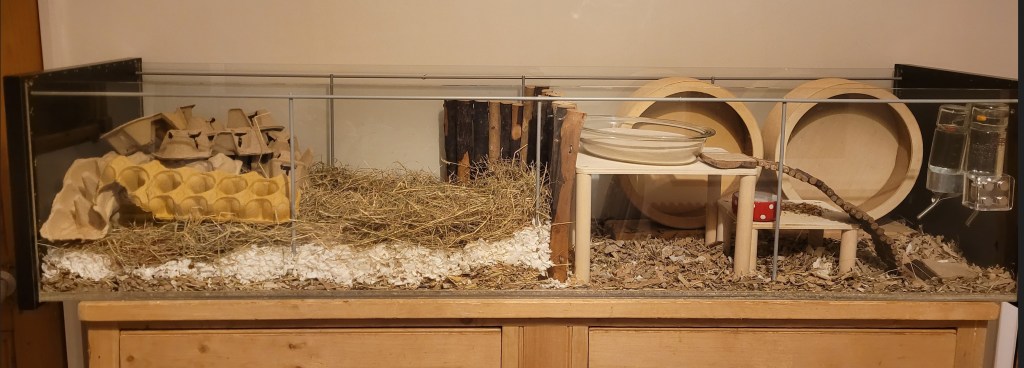
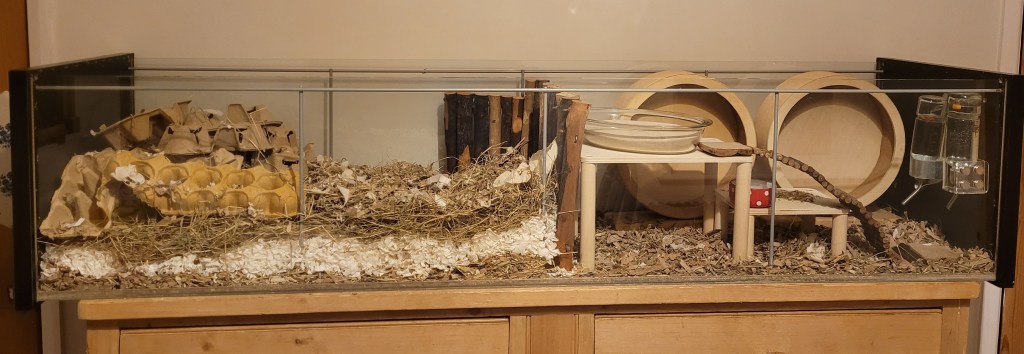
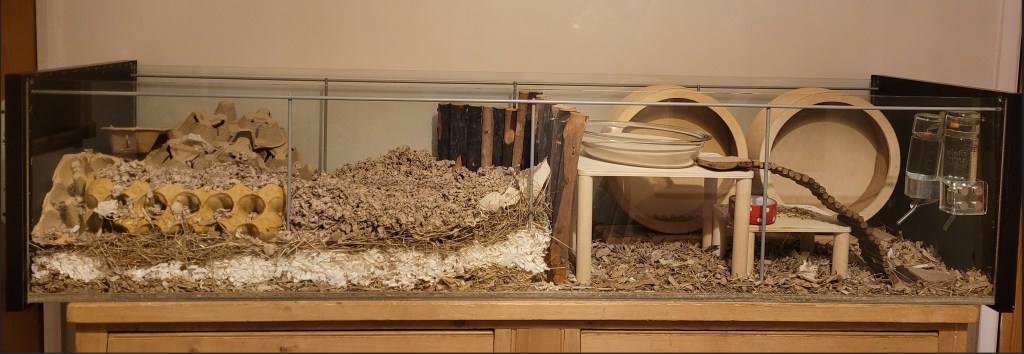
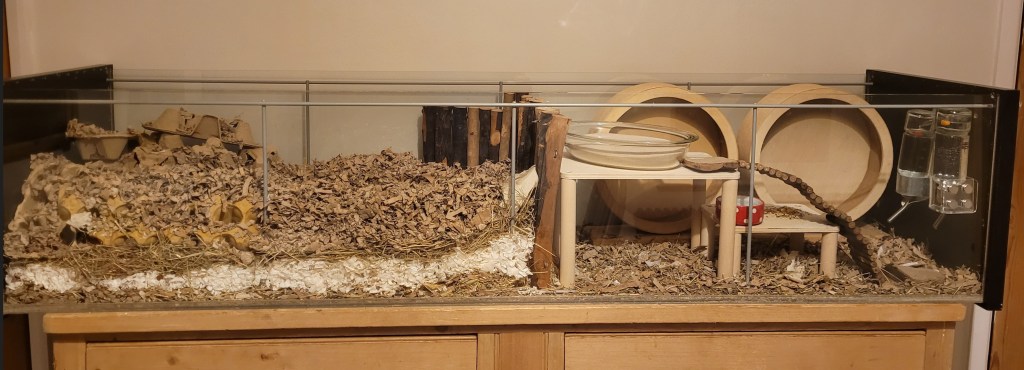
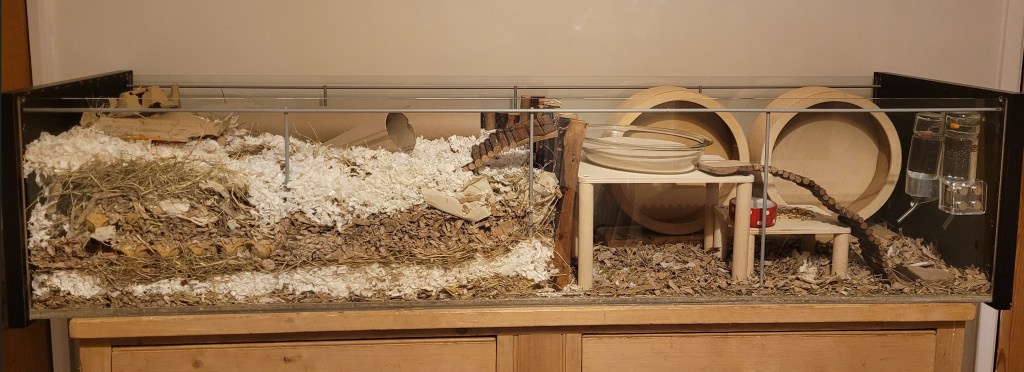
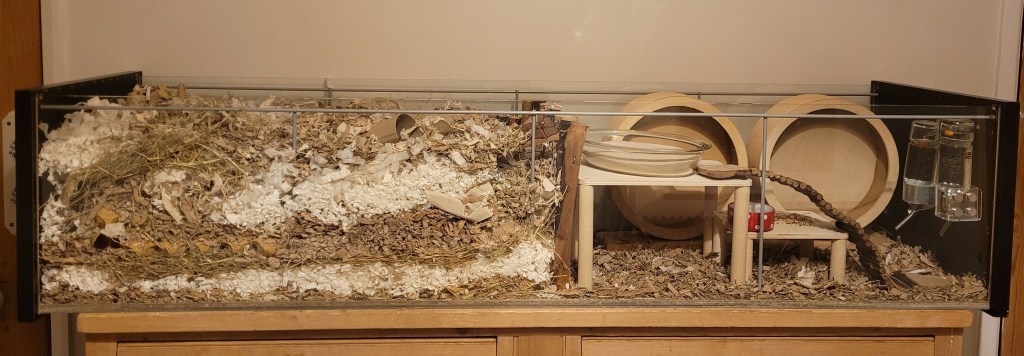
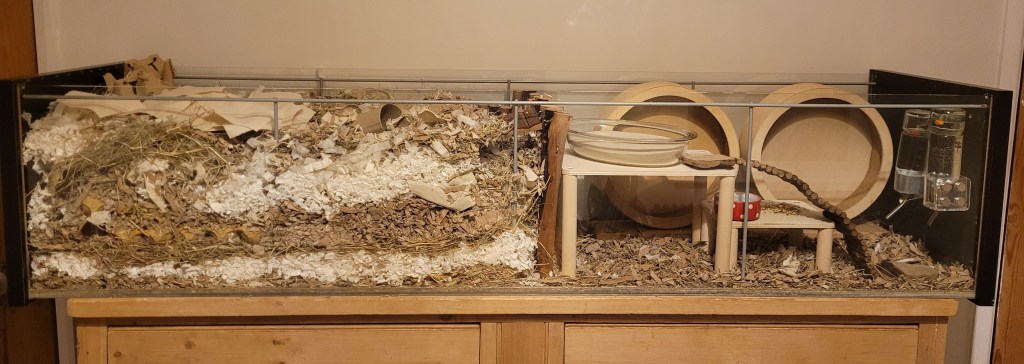
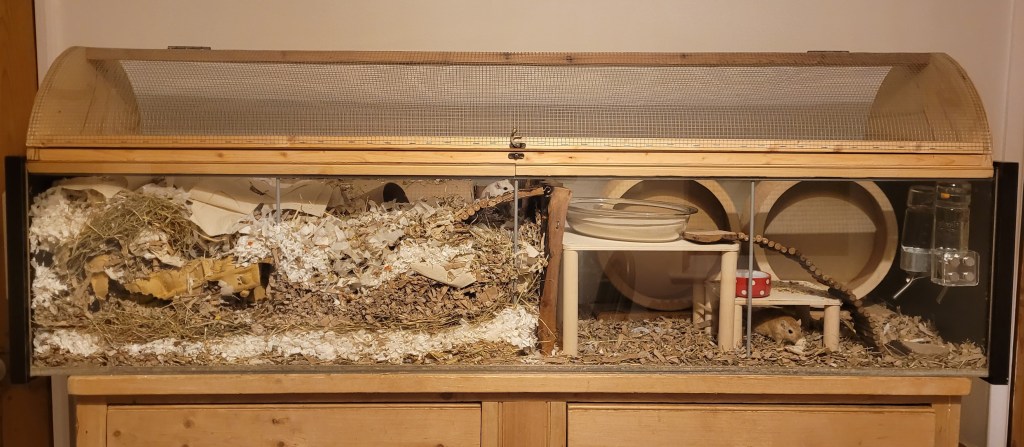
We show you how to construct a Gerbils tank in the step-by-step pictures below. Filling a Gerbils tank is a bit like making a trifle. Working layer by layer, alternate between adding the substrate, see our Substrate Bedding & Nest Boxes section) and Meadow Hay (Gerbils need hay to bind their tunnels). Scatter in handfuls of food and Enrichment to encourage their foraging instincts. Repeat these stages until at least 10inches (25cm) deep. Add egg boxes, brown packaging paper, wide cardboard tubes and small carboard boxes (brown cardboard delivery boxes are ideal). Be creative, your Gerbils will love you for it!
Between tank cleans, add Meadow Hay, lightly scattered food and be generous with toilet paper sheets (unbleached, unscented, plastic free) like Super Soft, Unbleached Bamboo Eco Toilet Paper | Naked Paper – Gerbil nests are constantly under construction!
Sand Bath
Clean the sand bath twice a day (a small sieve is perfect for filtering out any dirt, that way you don’t need to replace all of the sand every day). Gerbils are super-clean pets so you will only have to fully replace the sand in their bath once or twice a week.
Disinfectant: Always use a small pet Pet Safe Disinfectant and rinse off with water. Avoid household products as they contain toxic ingredients.
White Vinegar: White Vinegar solution is a cheap, effective house-hold cleaner. Vinegar is also a well known as a way to repel rodents, i.e. whenever we’ve had wild mice in the kitchen we successfully and humanely encourage them to leave using white vinegar. Vinegar is unpleasant to rodents, will disrupt their scent trails, making it harder for them to navigate and find food. Therefore it strikes us as counter-intuitive to use this in a Gerbils tank, and we’d recommend an off the shelf pet friendly disinfectant instead. What does vinegar do to rodents? – The Institute for Environmental Research and Education
Wooden Ledges
If you find ledges getting overly soiled, you can cover your wooden ledges in disposable cardboard. Spot clean the ledges daily and change the card as needed. During a full clean remove and detach all wooden items, spray with a pet safe disinfectant and immerse in boiling water. Leave these out to air and dry
Wooden/Metal Wheels
Wipe these down regularly (as above with wooden ledges) and spray with a Pet Safe Disinfectant , and replace as needed.
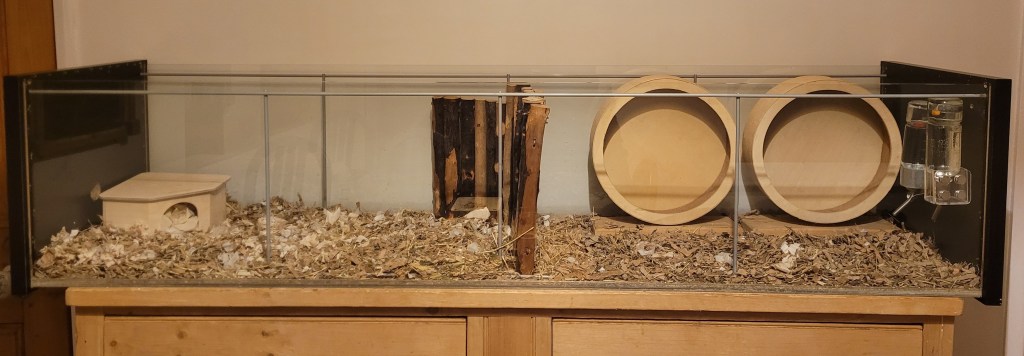
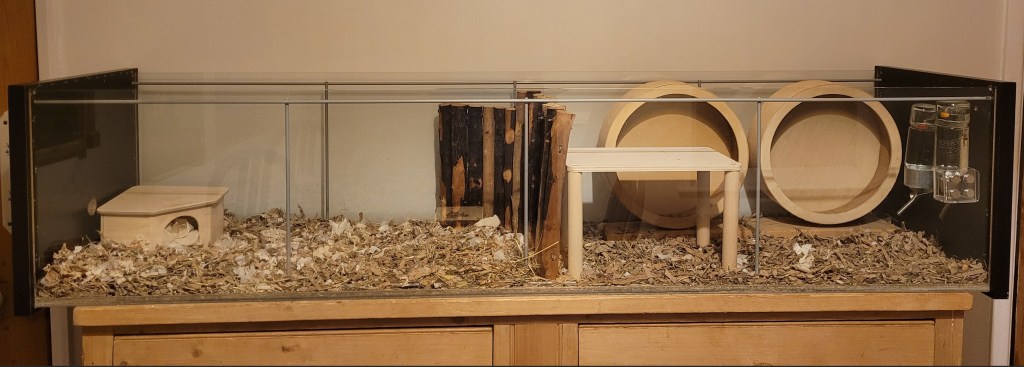
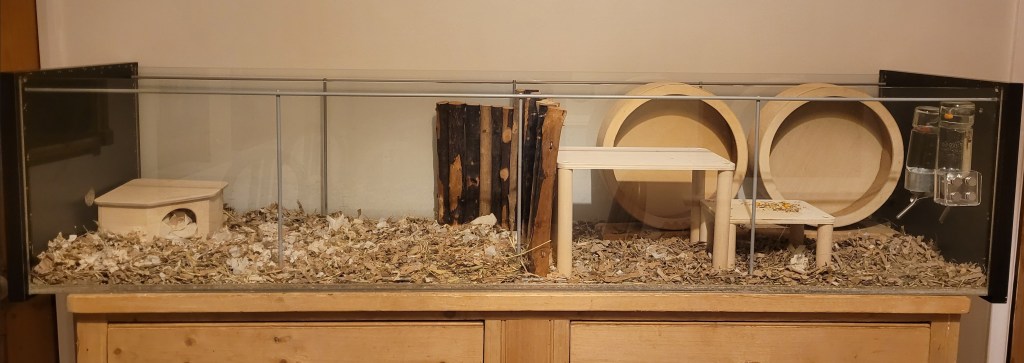
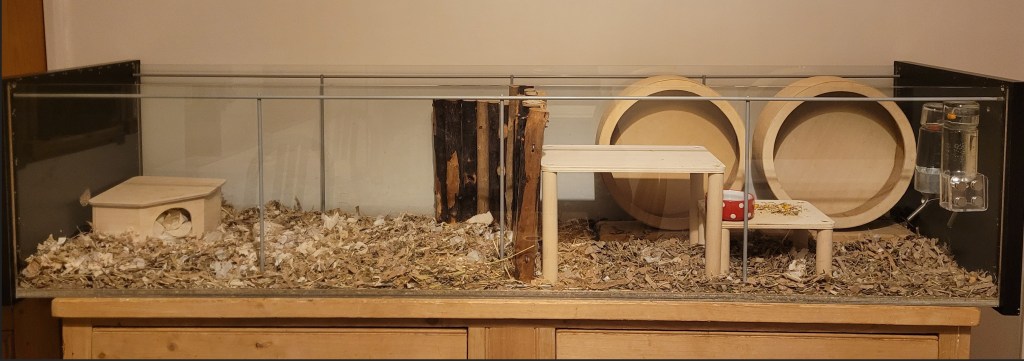
How to construct your new tank – To recreate this tank, everything pictured below is featured in our Getting Started What Do I Need & Where Do I Get It section. We’re showing a demo with an Ikea Detolf, but you can adapt this to whichever tank you’re using.
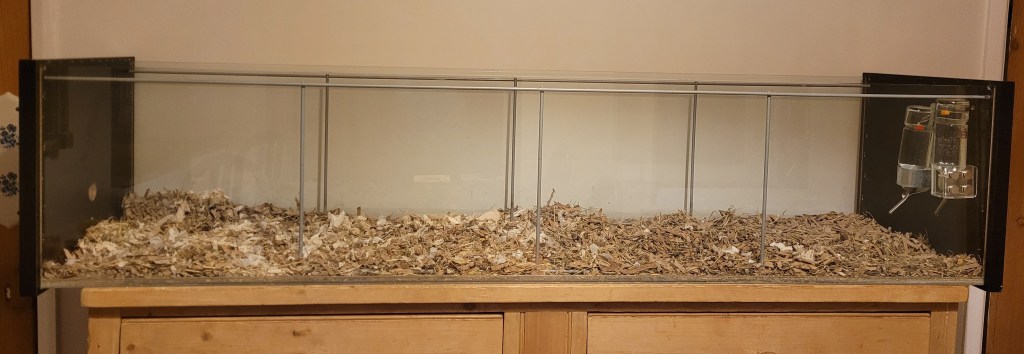
Start by emptying your tank, clean with a Pet Safe Disinfectant and keep 20%+ of the old substrate to add to your new tank
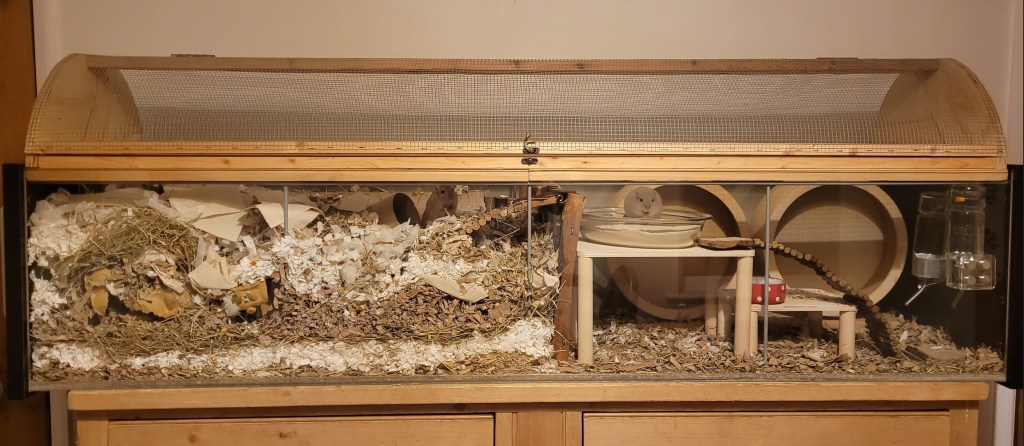
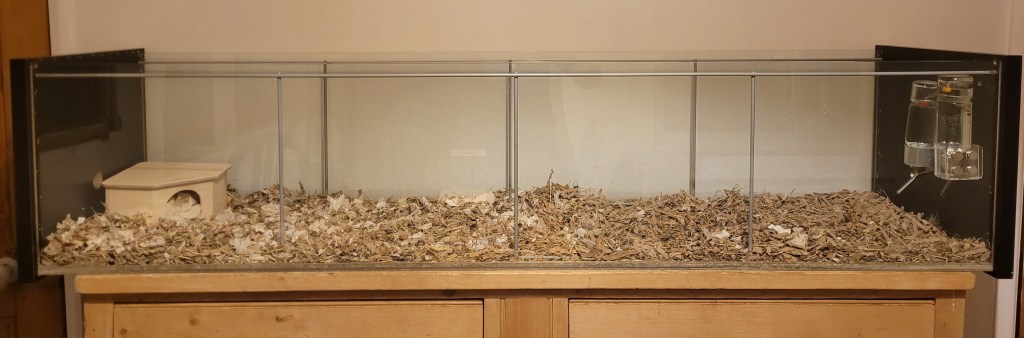
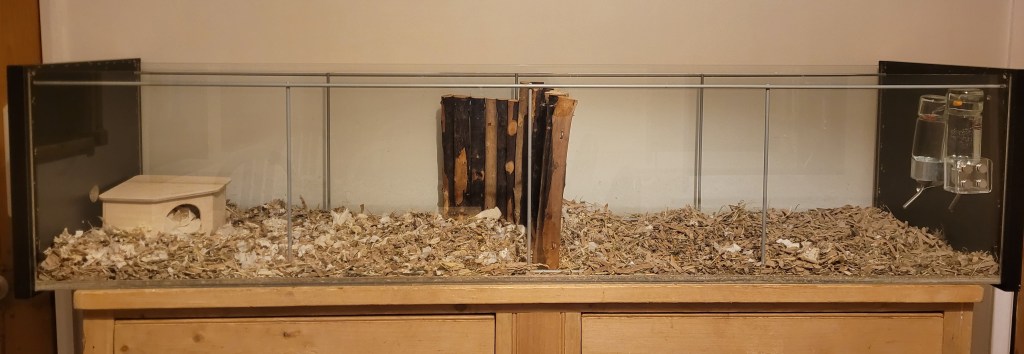
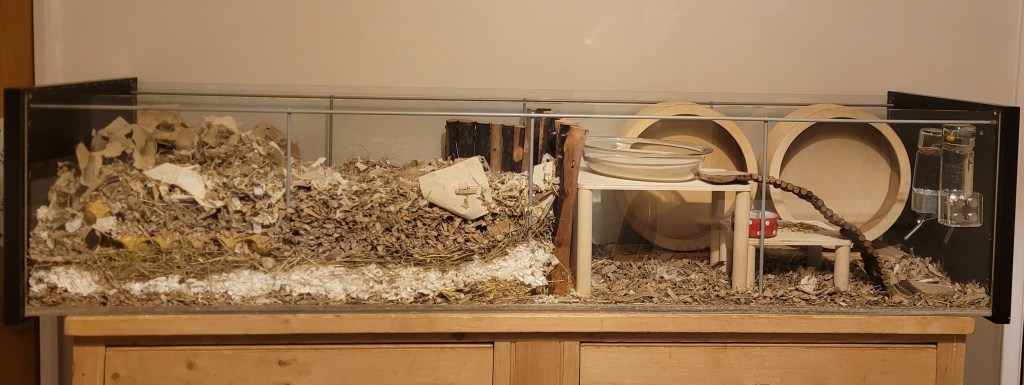
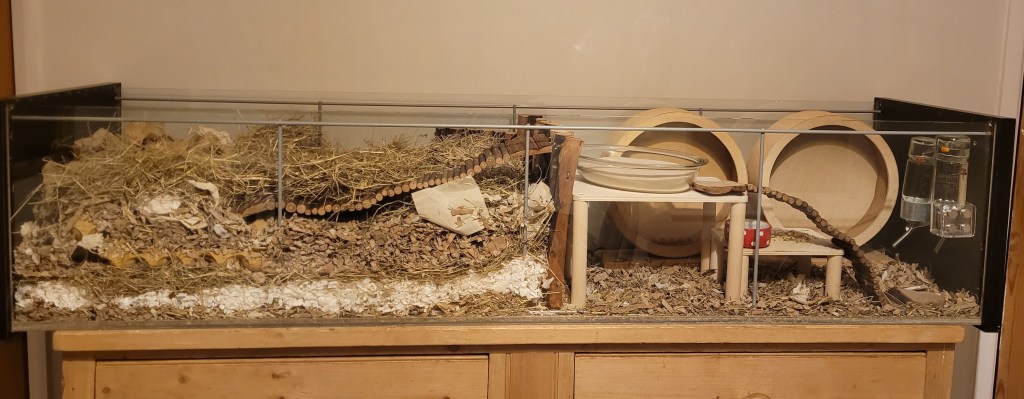
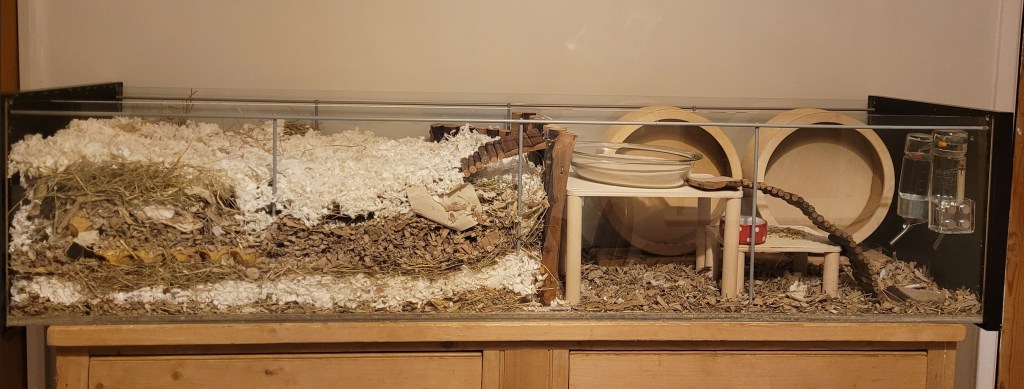
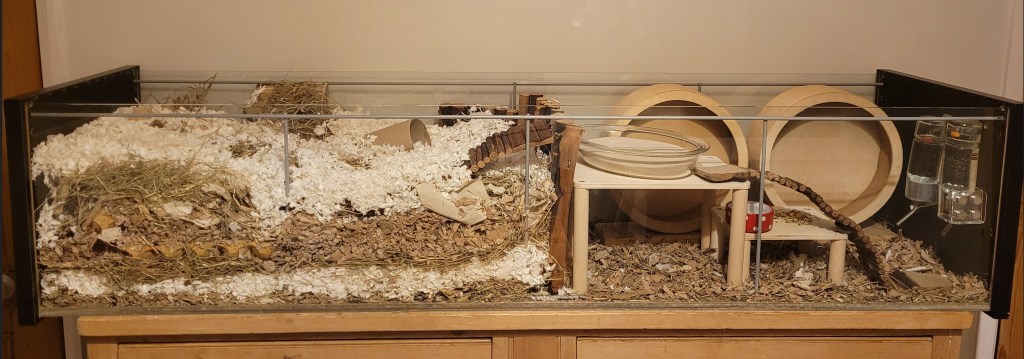
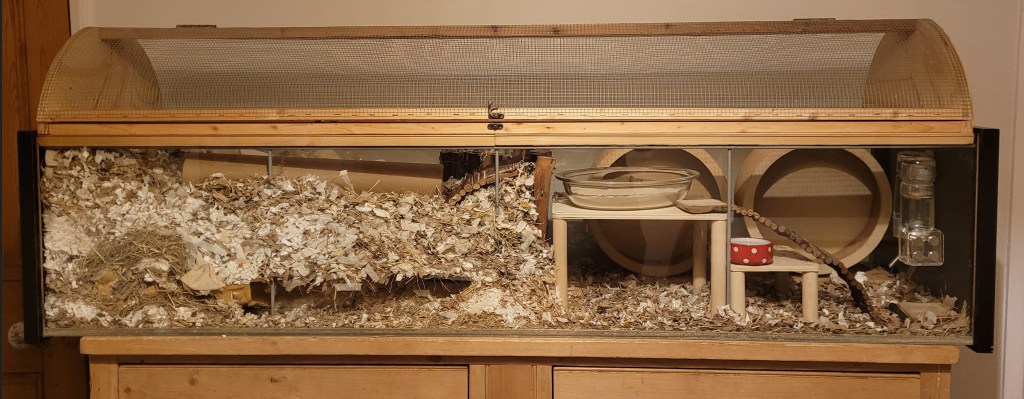
Add a layer of substrate – we’ve used Green Mile cardboard plus some old bedding to keep the scent familiar. The water bottles are Living World 177ml glass bottle in a Lixit Holder and a Living World 177ml glass bottle in a Bucastate Magnetic Holder. Two bottles prevent resource guarding and if one fails you have a back up.Add a nest Box. We’ve used a Niteangel Birch Nest Box in Large and added in some unbleached, unscented, plastic free, toilet paper sheets, (we’ve used Naked Sprout) so your Gerbils can make their own nesting material. Also add some of their old nesting material so the scent is familiar to them. Scatter dry food into the substate, particularly on the right hand side where the substate won’t be so deep.Add a Log Divide to separate the wheel, food, and sand area from the deep burrowing and nesting area. We’ve used a Trixie Willow Bridge 65 x 40cm (L x H) There’s a hole in the bottom, roughly 2 logs wide and 2 inches high, so Gerbils can travel under it as well as over it, which helps them create their tunnels.Add your Wheel(s). As we have room we’ve added two so the Gerbils have one each to limit any resource guarding or squabbles. These are Trixie 28cm wooden wheels.Add a stand for your Sand Bath and to create an exit from one side of the tank to the other. We’ve used HappyHenrysHomes Platforms in pet safe wood 30cmx20cm with 20cm birch legs.We’ve used another HappyHenrysHomes Platforms 20cmx15cm in pet safe wood, with 10cm birch legs. This is for the water bowl and to scatter feed.A water bowl is added to the smaller stand, so there are 3 sources of water, 2 bottles and 1 bowl in case of bottle failure and to prevent resource guarding (where one Gerbil attempts to monopolise food or water). Add a Sand-bath so your Gerbils can keep themselves clean. This is a simple glass Pyrex dish with reptile sand. See our Enrichment, Wheels, & Sandbaths page for a choice of safe sands. Add a willow bendy bridge for access to the Sand-bath level. We’ve used a Hanging Bridge for Small PetsStart layering up your substrate. The base level is Green Mile cardboard, mixed with old bedding. This next layer is Fitch. Your choice of substrate is personal, but for some safe substrate and bedding choices see our Substrate, bedding & nest boxes page.Scatter dry food between layers to encourage foraging. This next layer is Meadow Hay. For hay types see our Substrate, bedding & nest boxes page.Add plain cardboard for enrichment. We’ve used plain eggboxes with any labelling taken off and cardboard coffee cup trays.Add another layer of the old substrate cleaned out from the previous tank. This is to keep the smell of the tank familiar to your Gerbils as they rely heavily on scent.We’ve added another layer of substrate, this time Carefresh.Add another layer of substate, Green Mile cardboard. Keep sprinkling dry food into the substrate to encourage foraging and don’t used a food bowl as this can cause resource guarding where one Gerbil attempts to hog the food.Add another layer of the old substrate from the last tanks cleanout to keep the scent in the tank familiar for your Gerbils. We’ve added more cardboard too.Add a Willow bendy bridge to create access from one side of the tank to the other. We’ve added another layer of Meadow Hay.Add another layer of substrate. This time we’ve used Fitch and Tea Bag Bedding. We’ve added Brown Postal Tubes 460mm x 76mm going down to nest to get the Gerbils started when we put them into their new tank.We’ve added another Brown Postal Tubes 460mm x 76mm to the top of the substrate to act as a hide – but this will become very useful when you want to get your Gerbils out of the tank as they will step into it and can be transported with no fuss. We’ve also added more eggboxes and cardboard.We’ve added more Tea Bag Bedding. Keep sprinkling dry food on to the top of the substrate. Add another layer of the old substrate from your Gerbils last cleanout. This keeps the scent in the tank familiar to your Gerbils on the top layer. Add plain, unscented, plastic free toilet paper sheets to the top of the substrate, so your Gerbils can use it to take underground to their nest box, to create their own nesting material. We’ve used Naked Sprout Toilet Paper. Add your Gerbils! Mr Marinakis and Freddie exploring their fresh new tank and getting ready to terraform it to their liking. Because of the size of their tank, they won’t need to be cleaned out again for at least 8 weeks. Don’t clean out your Gerbils too often as the are naturally very clean and find it stressful to have their habitat cleaned out too often. Sprinkle dry food regularly into the substrate and keep adding toilet paper sheets/nesting material, as their nests are constantly under construction.The same tank 6 weeks later. In this example, the mix of Green Mile, Tea Bag Bedding, Carefresh, Fitch and Meadow Hay holds tunnels well.



 Gerbil Care