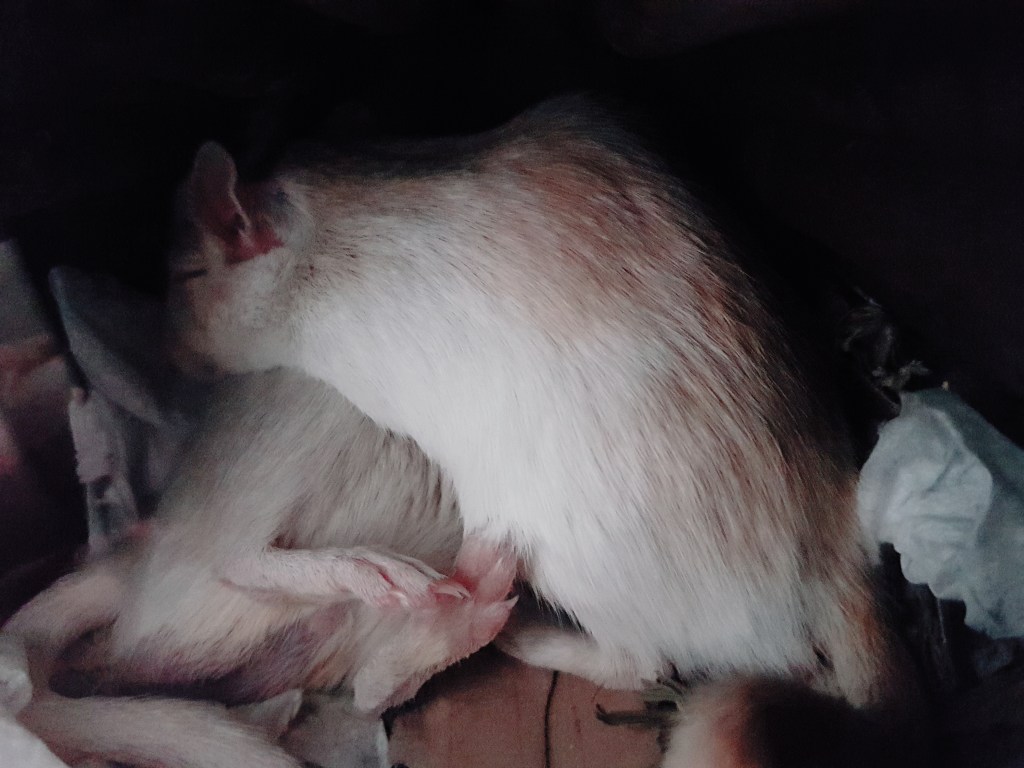

Gerbils are just like us: they’re social animals and thrive in groups. Other than those rare occasions when a Gerbil is forced into solitude (serious illness, de-clanning or waiting for a suitable partner), your Gerbil should never be left alone. It may appear “ok” to you, or you may think “my Gerbil seems happy on their own” or “it might be stressful to get them a partner” but the reality is your Gerbil will quickly become lonely and depressed. Leaving a Gerbil alone is cruel in the same way it would be cruel for you to have to no human contact. Gerbils need company to:
- Groom each other.
- Construct burrows.
- Sleep together and keep warm.
- Protect each other from predators (you will hear one Gerbil drumming its back legs as a warning to the others).
- Interact and play.
In the wild, Gerbils live in hierarchical groups known as a “clan”, consisting of one dominant male and female breeding pair, plus their offspring. In captivity, never keep un-neutered males and females together, as they will mate. Rescue Centres are already stretched to capacity with unwanted pets. In captivity, this “clan” consists of same-sex pairs or groups (or mixed-sex pairs or groups if the males are neutered). Every group has an Alpha Gerbil, i.e. the head of the clan. Pairs are the most stable Gerbil group.
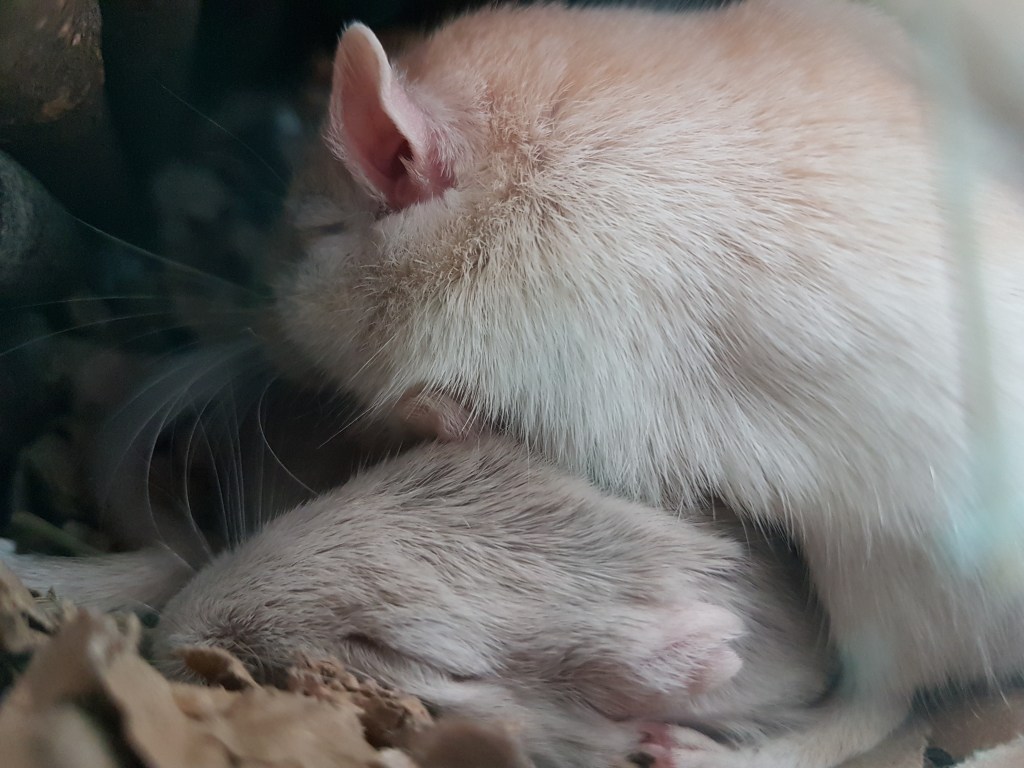
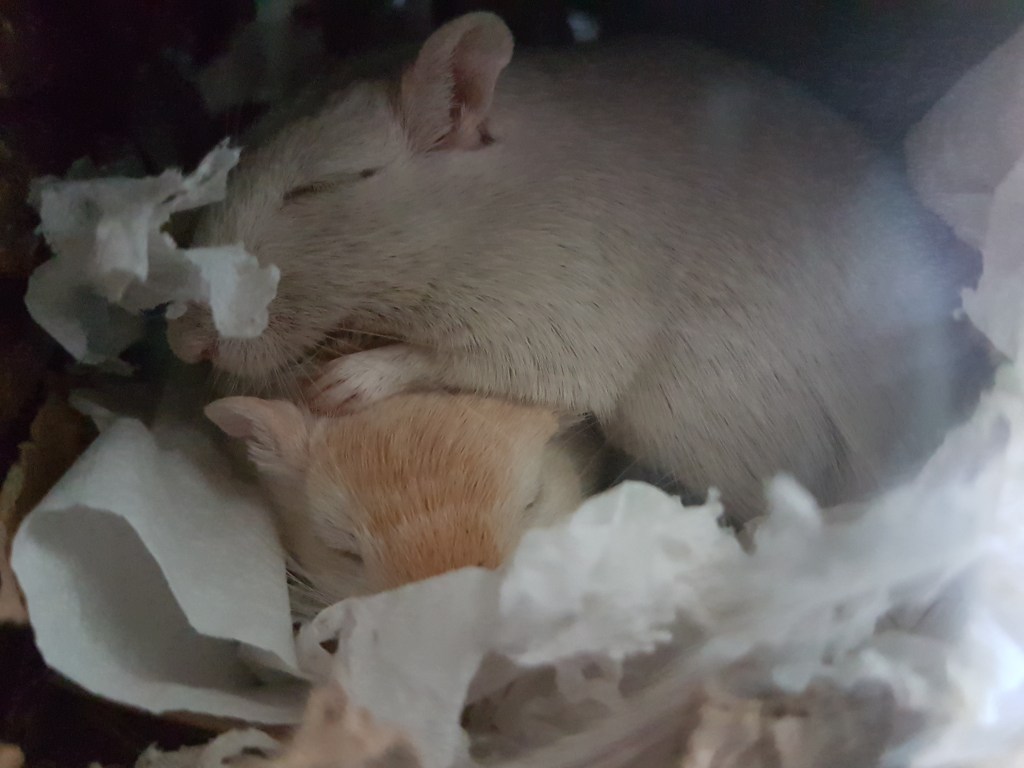
Single Gerbil: If you have a single Gerbil, you will need to bond it with another Gerbil, see our Bonding & Split Cage – Gerbil Care page for how to do this. Take a look at our page Adopt Dont Shop – Where can I find Gerbils? or join Gerbil Rehoming & Rescue UK | Facebook where other UK Gerbil owners have Gerbils they are looking to pair up or rehome for bonding.
Pairs: Pairs are often the most stable group, as simply put, less Gerbils means a more stable hierarchy as there are less Gerbils to make a challenge for Alpha status.
Groups of 3: While pairs are ideal, should you find a group of 3, please never separate out one Gerbil from it’s siblings, leaving it alone. While groups this size can and do live harmoniously (many people report no issues), do monitor them closely for any signs of de-clanning, as you would with any pair. We show you the signs and what to do here De-clanning & Fighting – Gerbil Care
Groups of 4+: A group of 4 is better divided into pairs, or if an odd number (i.e 5) a pair and a group of 3, taking care to put the dominant Gerbils (where known) into different groups. As with groups of 3 above, do monitor more closely. Simply put, more Gerbils, potentially means more chance of a challenge for Alpha status.
Please note: It’s important not to separate your Gerbils for any longer than a few hours (and only if completely necessary), as they recognise each other based on scent. Prolonged separation can result in de-clanning, and the need to re-bond them again, see our Bonding section. If one Gerbil is sick and needs to see the vet, make sure you bring their partner(s) too. If one of your Gerbils needs an operation, take them both to the vet in a small “hospital” cage and insist that they are reunited as soon as the operation is over and your Gerbil has come round from the aesthetic.
 Gerbil Care