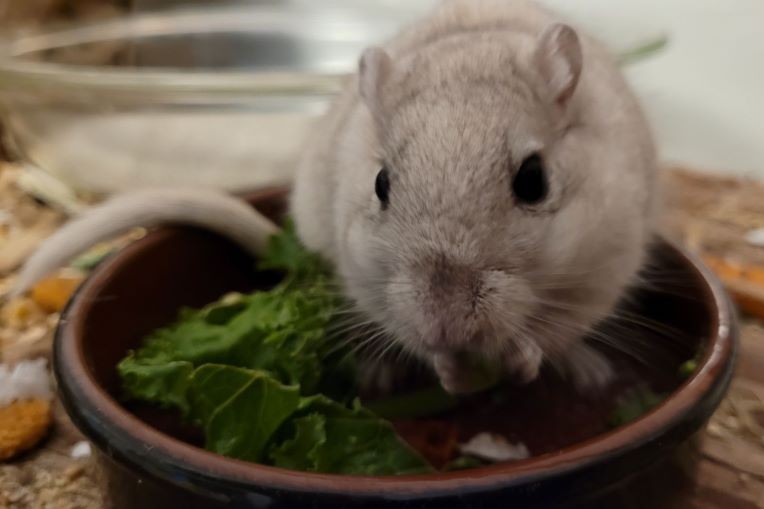
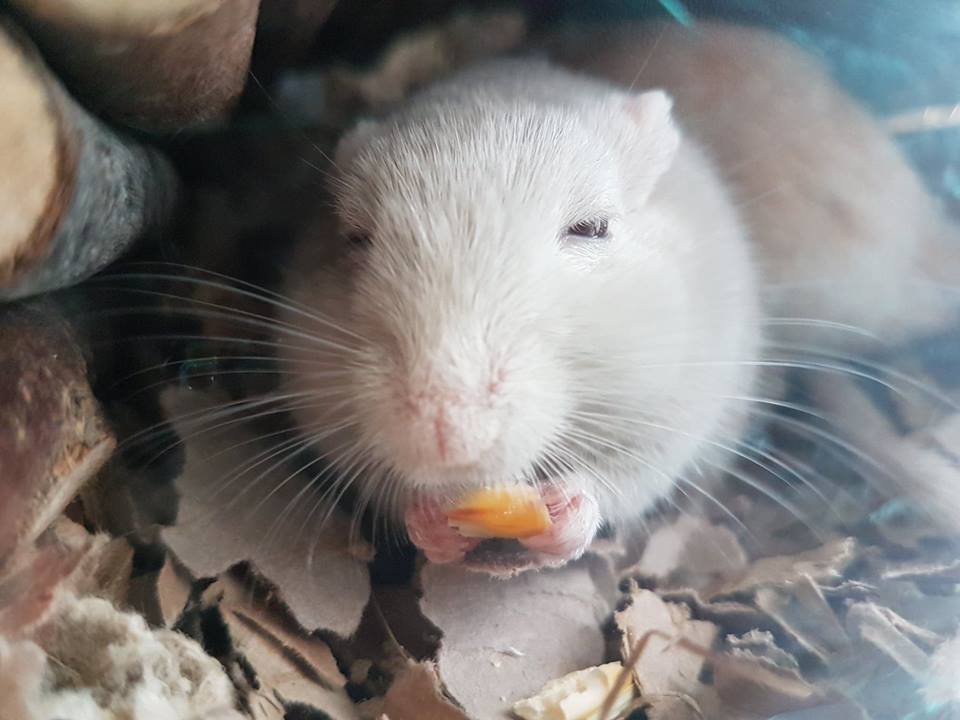
What do Gerbils eat?
You want to provide a diet that mimics what your Gerbils would eat in the wild, where they consume seeds of grasses, grains, roots, herbs and when available berries. Gerbils also eat insects and larvae. Give your gerbils a good quality dry food as the staple of their diet, with a little insect protein, and fruit and vegetables in moderation. Note, not too much fruit or vegetables as they are high in water content and can cause diarrhoea which can be fatal for Gerbils. As a basic rule, a thumbnail size per Gerbil, no more than twice a week. A Gerbil should consume 5g of dry diet per day – Gerbils – Exotic and Laboratory Animals – MSD Veterinary Manual,
We are not affiliated to any suppliers, we don’t make money from this website and we only recommend products we use and love. These links are to make searching easier for you, but feel free to shop around.
Scatter & Forage Feeding
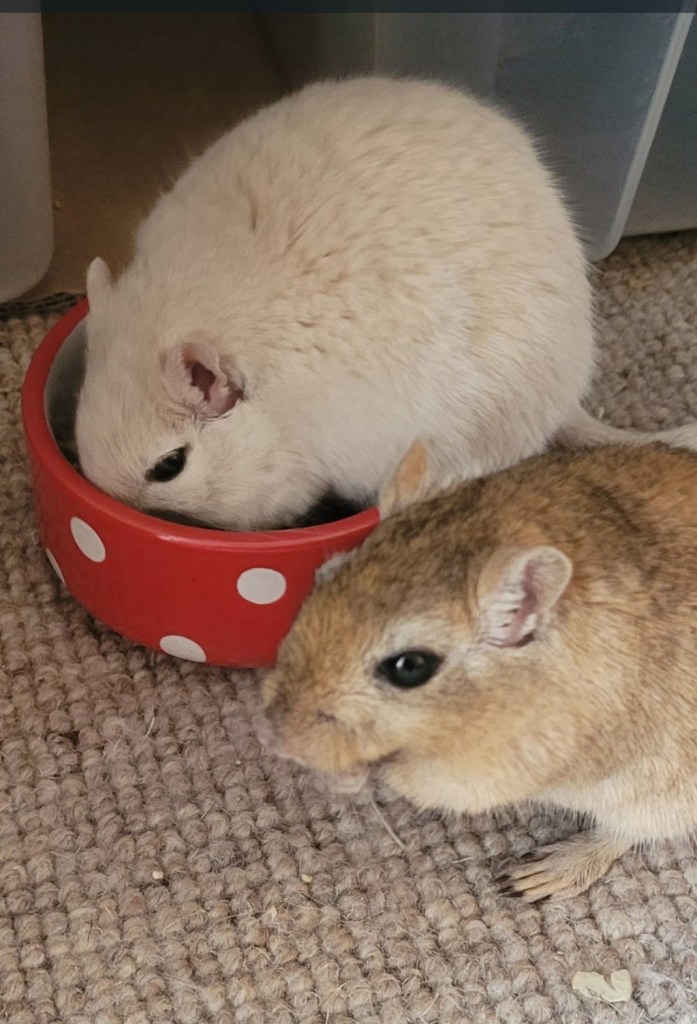
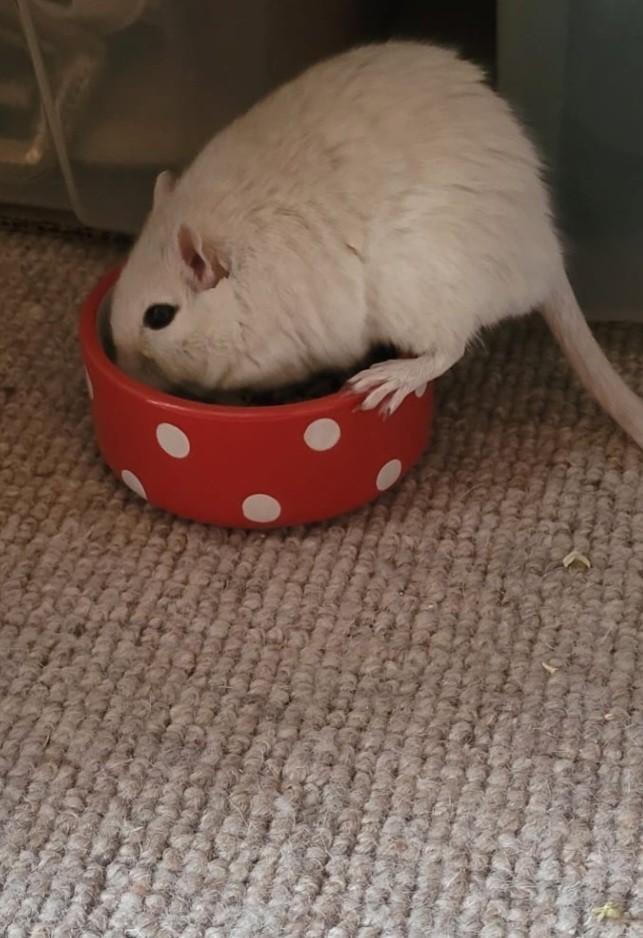
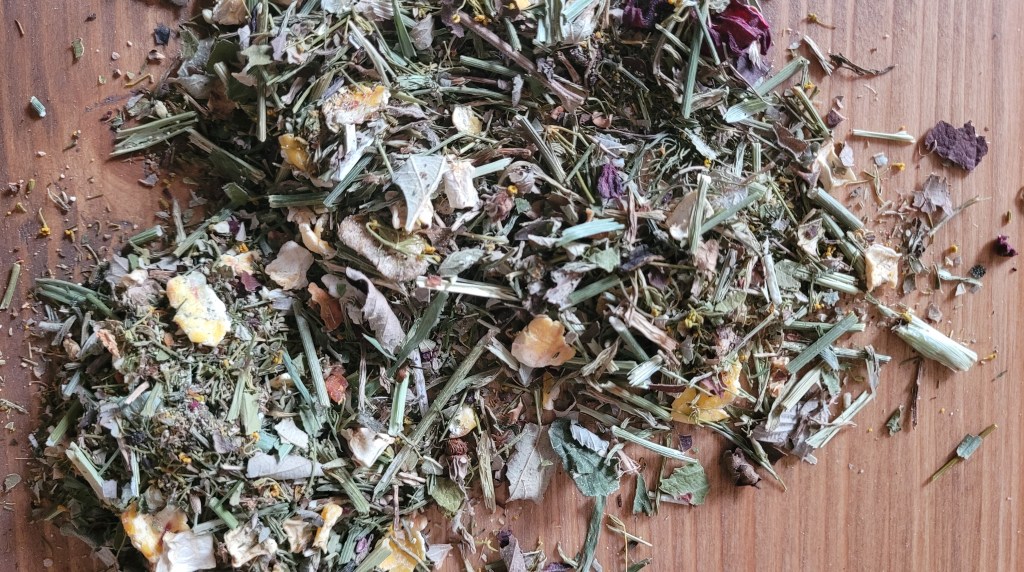
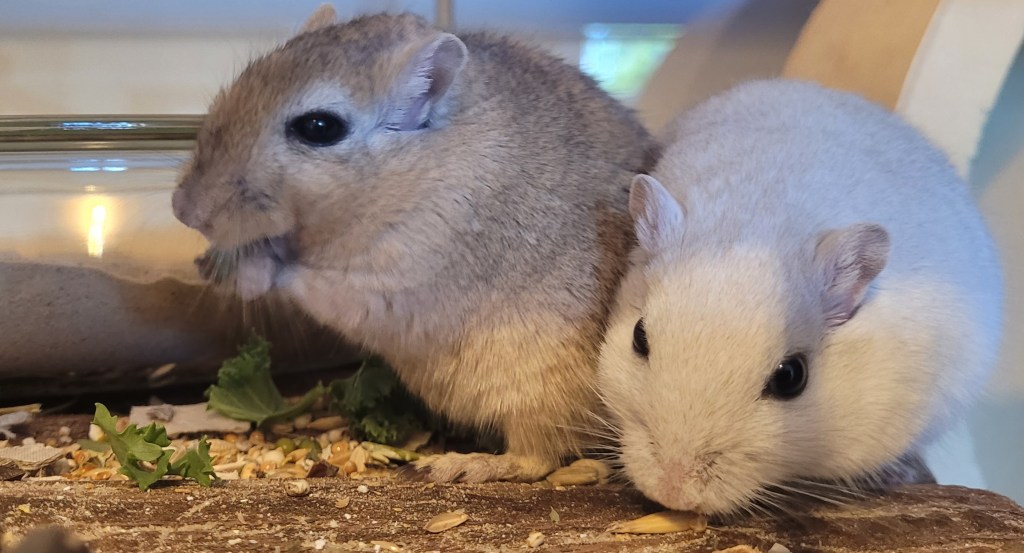
Scatter feed Gerbils. Don’t provide a food bowl, just scatter their usual daily food over the top of their substrate and tank levels. This encourages their natural foraging instincts, prevents resource guarding (one Gerbil monopolising the food, like Marinakis above) and provides enrichment. It’s fun to watch your Gerbils forage as they would naturally so you can sprinkle forage foods around their tank and in their substrate. As a compliment to their usual daily food, we like Natures Own as they sustainably farm, donate a % of spend to animal charities, use recyclable packing, are chemical free, dust extracted and good value, but do check any ingredients against our unsafe foods list (below). Gerbil safe mixes our Gerbils have enjoyed are Herb Mix with Carrots & Peas & Country Garden Herb Mix & Hedgerow Salad
Which Gerbil Food to buy? There are a few Gerbil foods in the UK that are cheap and easy to purchase, but many are just pellets designed to provide all the vitamins and minerals a gerbil needs, but there’s no interest or variety, so we don’t recommend only providing these. You could try Little One for Gerbils however it is not as complete as the better quality import Premium mixes we talk about below, i.e Bunny Gerbil Dream Basic & Expert. Gerbils require a diet of 18-20% Protein and ideally no more than 4% fat, see “Husbandry” section Gerbils – Exotic and Laboratory Animals – MSD Veterinary Manual or Nutrient Requirements of the Gerbil – National Library of Medicine.
Gerri Gerbil Food Tasty Mix – 850g bag. Protein 17%, Crude Fibre 4%, Fat Content 8%, Inorganic Matter 5%, Calcium 0.8%, Phosphorus 0.6%. You’ll see this Gerbil Food everywhere, but we don’t recommend it. Why? Although the protein levels are good, the Fat content is 8%, double the ideal 4%. Gerri Gerbil also advertise feeding your Gerbil 5-10g of food per day, which is double the amount linked to by research above.
We don’t review every Gerbil food, and using the guidelines above you can tell which are too high in fat, or too low in protein, but here are 3 that we’ve selected as below 5% fat and readily available. We order them in preference 1. Bunny Gerbil Dream Expert 2. Bunny Gerbil Dream Basic 3. Little One for Gerbils.
Little One for Gerbils – 400g bag. Protein: 11.9% Fat: 4.9% Fibre: 5% Ash: 7% Calcium: 0.9% Phosphorus: 0.6%. This is a mid range Gerbil Mix that’s available in the UK everywhere. It is 0.9% higher in fat than the ideal. The mix is lacking protein, so the solution is to add 25g of animal protein (i.e. dried meal worms, crickets, small freeze dried chicken pieces) and mix it into the 400g bag/tupperware container, to make it a more nutritionally complete mix. It does contain banana chips which you could take out and give them to the Gerbils once every two weeks as treats. Ingredient List: wheat puffed, wheat, red millet, barley flakes, maize puffed, multigrain pellets, barley puffed, barley, maize red, canary seed, maize flakes, carob, buckwheat, pea flakes, dried banana (2,8%), sweet lupin flakes, spray millet, pumpkin seeds, sunflower seeds, dried carrot, peanut, bean flakes, fructooligosaccharides (0,4%), yucca extract (0,01%) In summary it’s a reasonably good food but we recommend mixing it (or replacing) with a premium Gerbil food, as below.
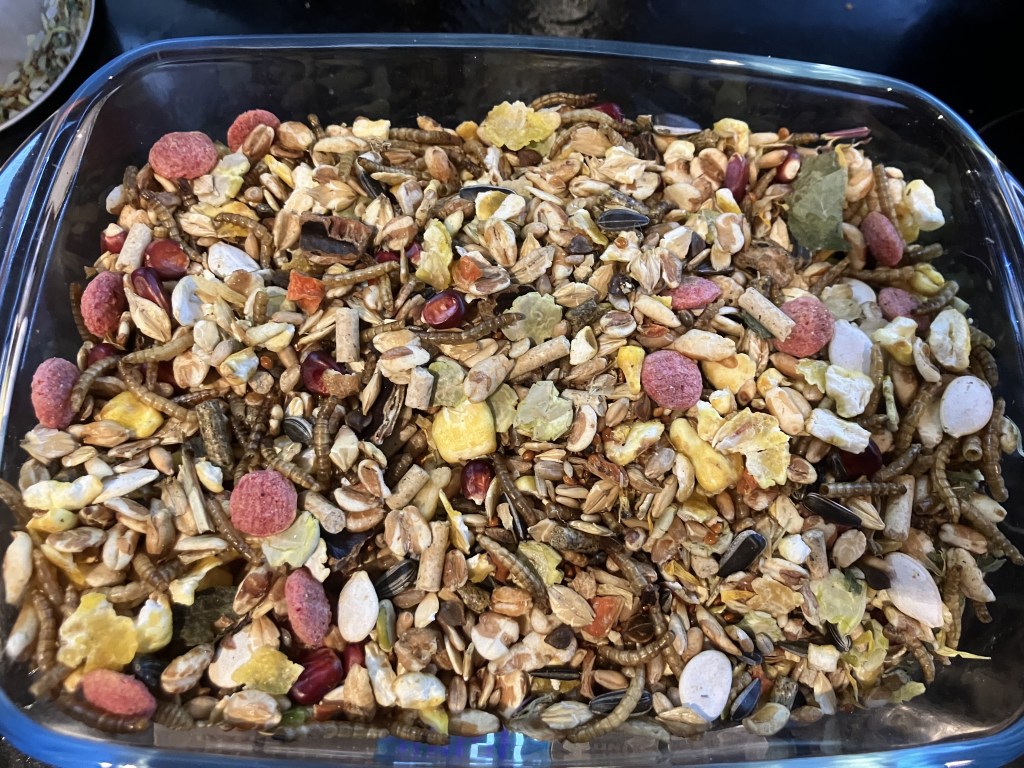
Bunny Nature Gerbil Dream Basic / Bunny Nature Gerbil Dream Basic Is usually available from Ebay, Vetsend, Miscota or Zoolini, but watch out for postage costs – 400g or 600g.
Crude protein 14% · crude oils and crude fats 4% · crude fibre 6.5% · crude ash 5.5% · calcium 0.6% · phosphorous 0.4%. This mix has a low fat content, although you could add an extra 16g of protein for 400g bag or 24g for 600g bag.
This is a good Premium mix, but the expert version below, is the best. Either of the links we’ve provided should have availability, otherwise shop around. Ingredient List: Plata millet, canary seed, pea flakes, spelt flakes, quinoa seeds (6%), kamut, mung beans (5%), silver millet, oats, red millet, dari, lucerne, dandelion leaves (3%), amaranth puffed (2,5%), carrots, parsnips, chicory root, sesame, ribwort (1%), oat flakes, calcium carbonate, beetroot, meal worms (1%), camomile blossoms, crickets (0,2%), semolina bran. Note: This is an imported food so buy in bulk to save on import costs.
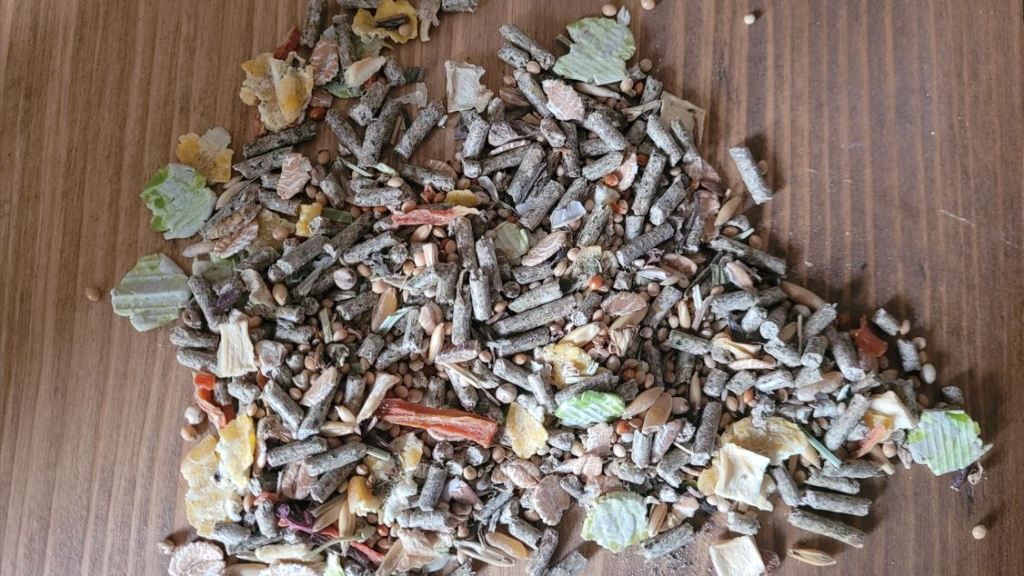
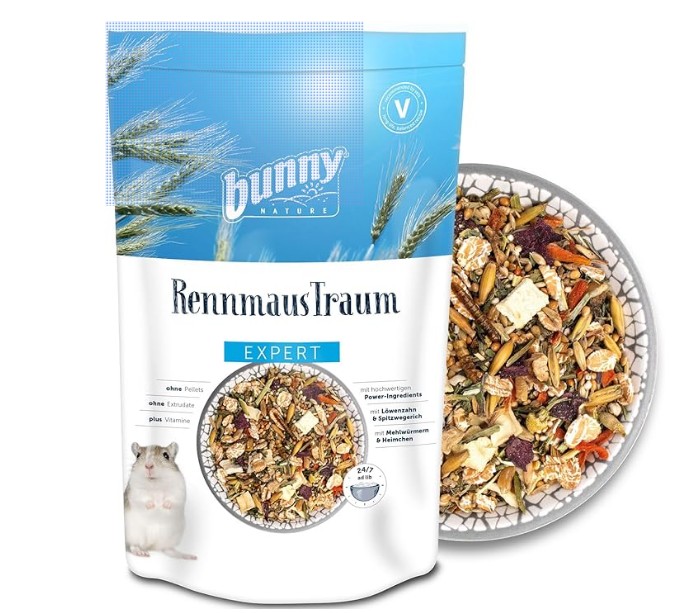
Bunny Gerbil Dream Expert – 500g This is the mix to go for. Due to import issues from Germany, if it’s out of stock on Ebay you can message to find out when it’s back in, or try Miscota or Amazon if urgent. It’s imported so watch out for postage costs. Currently (March 2026) Zoolini have it in stock with a £6.90 postage charge so we buy in bulk here bunny Mongolian Gerbil Dream EXPERT, 500 g – Zoolini.
Crude protein 14% · crude oils and crude fats 4% · crude fibre 6.5% · crude ash 5.5% · calcium 0.6% · phosphorous 0.4%. While the Basic version above is good, Expert is a much better Premium mix. As with the Basic version it has low fat content, but you could add an extra 20g of protein for a 500g bag. Ingredient List – plata millet, canary seed, pea flakes, spelt flakes, quinoa seeds (6%), kamut, mung beans (5%), silver millet, oats, red millet, dari, lucerne, dandelion leaves (3%), amaranth puffed (2,5%), carrots, parsnips, chicory root, sesame, ribwort (1%), oat flakes, calcium carbonate, beetroot, meal worms (1%), camomile blossoms, crickets (0,2%), semolina bran.
Please do not feed Gerbils foods labelled hamster, rat or mouse, as they are entirely different animals and require different diets.
Treats
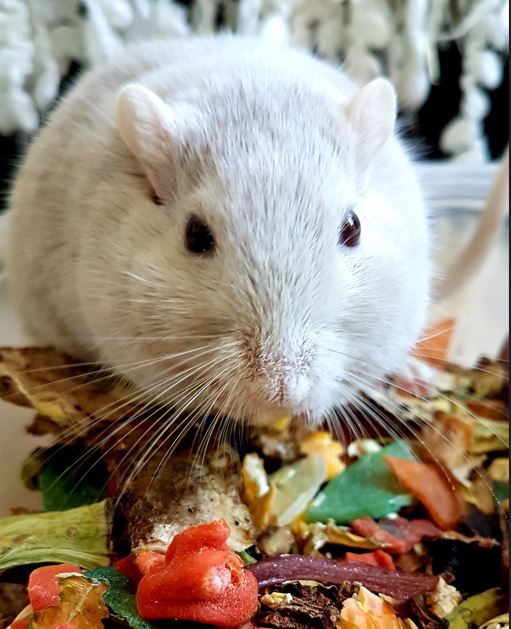
Treats should only be given in moderation. Given too often and you’ll end up with either an obese Gerbil or a fussy eater. Do not feed the stick treats which are seeds glued together with honey, as these are terribly fatty for Gerbils. Try these all-natural treats instead:
Seeds & Nuts: (these are occasional, no more than once a week treats only) – Chia Seeds, Millet Seeds, Flaxseed, Pumpkin Seeds, Pecans, Pinenuts, Hazelnuts, Monkey Nuts, Sesame Seeds, Linseeds, Squash Seeds, Sunflower Seeds, Walnuts.
Millet Spray: Often given to birds, Gerbils also love this as a supplement to their diet. We often leave a sprig in the tank.
Organic Dried Fruit: You can find these online or in Health Food Shops, i.e. pear, apple, blueberries are popular. Make sure they are 100% organic with no sweeteners.
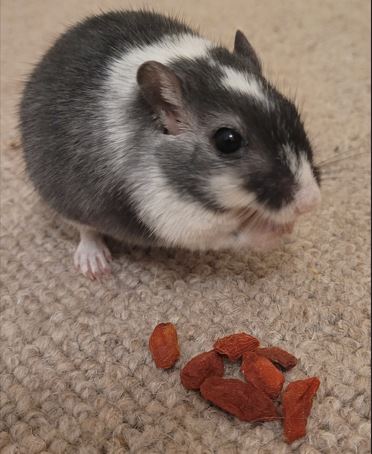
Goji Berries: One of the few foods that are native to Mongolia where Gerbils originate from. You can find these unsweetened, organic and freeze dried online.
Popcorn: Plain
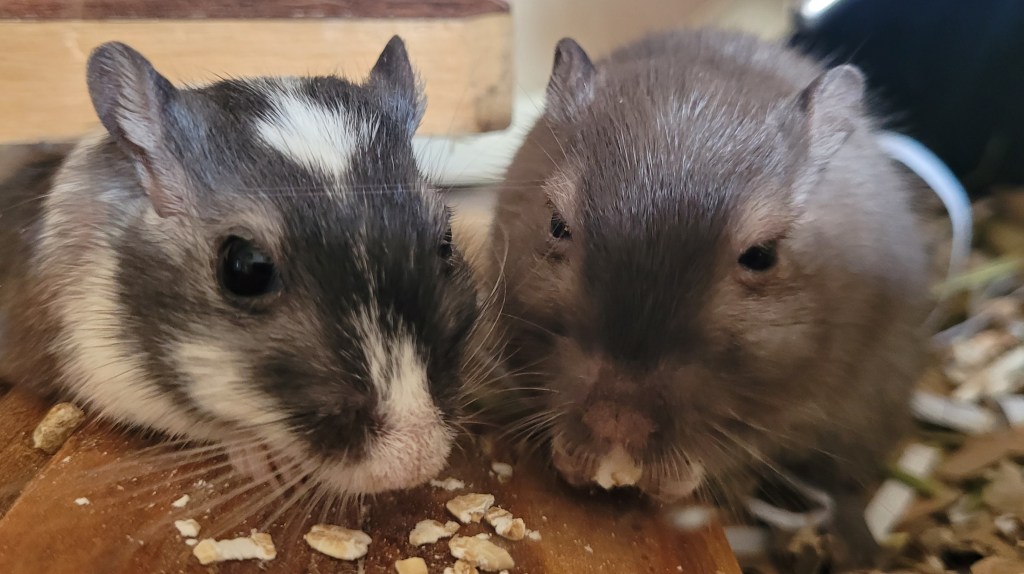
Porridge Oats: Gerbils often enjoy these as a treat sprinkled in their tank.
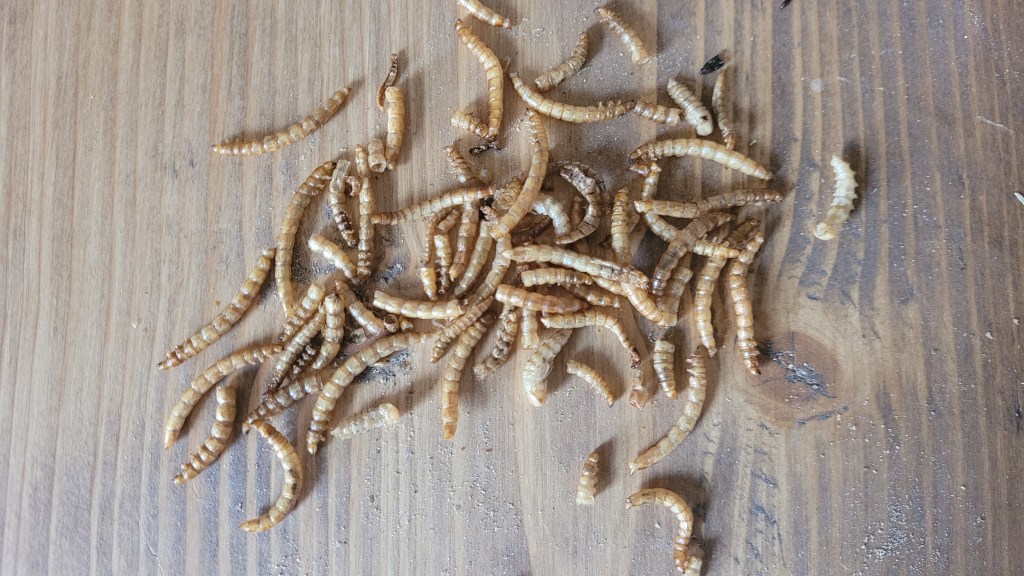
Mealworms: These can be purchased live or dried. Do not feed to excess. A few, once or twice a week is enough or mixed quantities as above into their daily food.
Chicken: Freeze dried, organic, this is a good source of protein.
Dried Crickets: A good protein source. Do not feed to excess. A few, once or twice a week is enough or mixed quantities as above into their daily food.
Fruit & Vegetables
Gerbils need fruit and vegetables to maintain a healthy diet, but these must be given in moderation. Too much fresh fruit and vegetables can give Gerbils diarrhoea, which can be fatal. Give small quantities of fruit and vegetables around twice a week, about a thumbnail size per Gerbil per sitting. They can only eat certain fruit and vegetables, so do check before you feed them anything new and avoid over feeding anything with high water content. The lists below aren’t exhaustive.
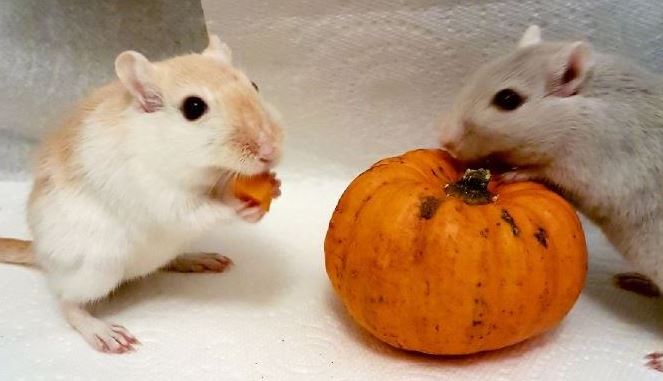
SAFE Fruit & Vegetables Gerbils will enjoy: (we could expand this list but have restricted it to known safe foods that we have tried and verified): Apples (note apple seeds are highly toxic and should not be fed), Asparagus, Bell (Red/Green) Pepper (seedless), Banana, Blueberries, Broccoli, Tender Stem Broccoli Heads, Brussell Sprouts, Cabbage, Carrots, Goji Berry, Kale, Peas, Pear, Pumpkin, Strawberries, Sweetcorn, Tomatoes (ripe)* (*Tomato leaves and stems are toxic to rodents, as are green tomatoes. Red ripe tomatoes are not toxic, but do have a high water content so feed sparingly, or choose a different fruit.)
Seeds & Nuts: (these are occasional, no more than once a week treats only) – Chia Seeds, Millet Seeds, Flaxseed, Pumpkin Seeds, Pecans, Pinenuts, Hazelnuts, Monkey Nuts, Sesame Seeds, Linseeds, Squash Seeds, Sunflower Seeds, Walnuts.
UN-SAFE Fruit, Vegetables and Foods (this list is not exhaustive, some are poisonous or toxic, some contain too much sugar or are acidic or may have high water content): Avocado, Apple Seeds, Buttercups, Chives, Citrus Fruit, Clemantis, Coltsfoot, Daffodil, Dates, Grapes, Grapefruit, Hemlock, Hydrangea, Iceberg Lettuce, Ivy , Kidney Beans, Laburnum, Laurel, Leeks, Lemons, Nightshade, Salted Nuts, Nuts (high in fat), Oleander, Onions, Oranges, Pineapples, Poinsettia, Potatoes, Raisins, Rhubarb, Satsumas, Flavoured Seeds, Fruit Seeds, Salted Seeds, Shallots, Soy Beans, Tangerines, Tomato Leaves/Stems, Watermelon Rinds, Yew, Yukka. High Carb Bread, Pasta, Crackers and biscuits can cause digestive problems, as do Chocolate and Dairy products, if it’s bad for you, it’s bad for Gerbils.

Water
Mongolian Gerbils originate from the Gobi Desert and Mongolian Steppe, where water is scarce. In the wild, most of their water intake is from the vegetation they eat or moisture droplets. Gerbils will voluntarily consume 4 to 10 mL water/100 g BW/day – Nutrient Requirements of the Gerbil – National Library of Medicine. Always provide your Gerbils with fresh water daily. Touch the bottle tip with your finger regularly to check it’s dispensing water correctly.
There are various ways to provide water to your Gerbils.
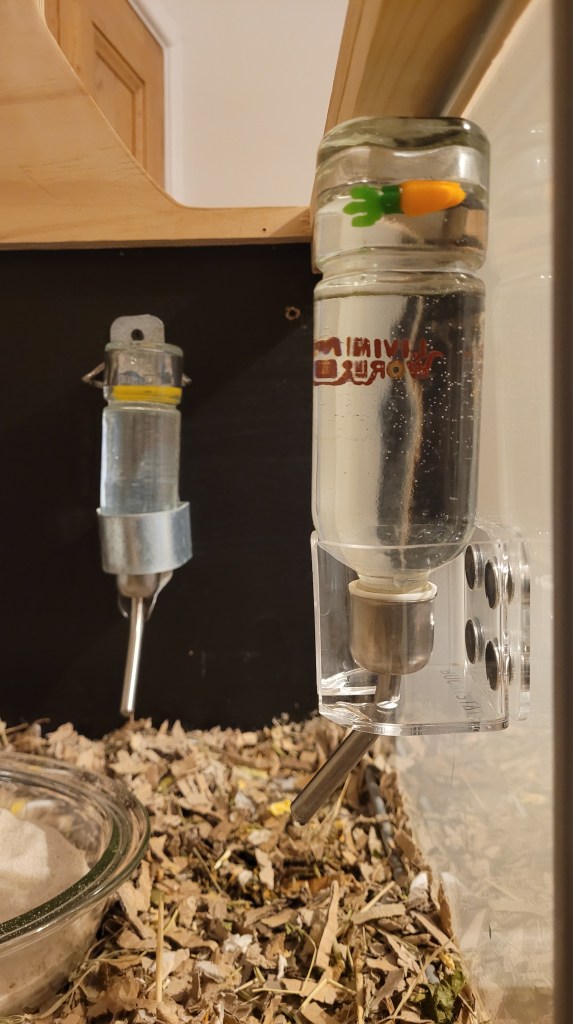
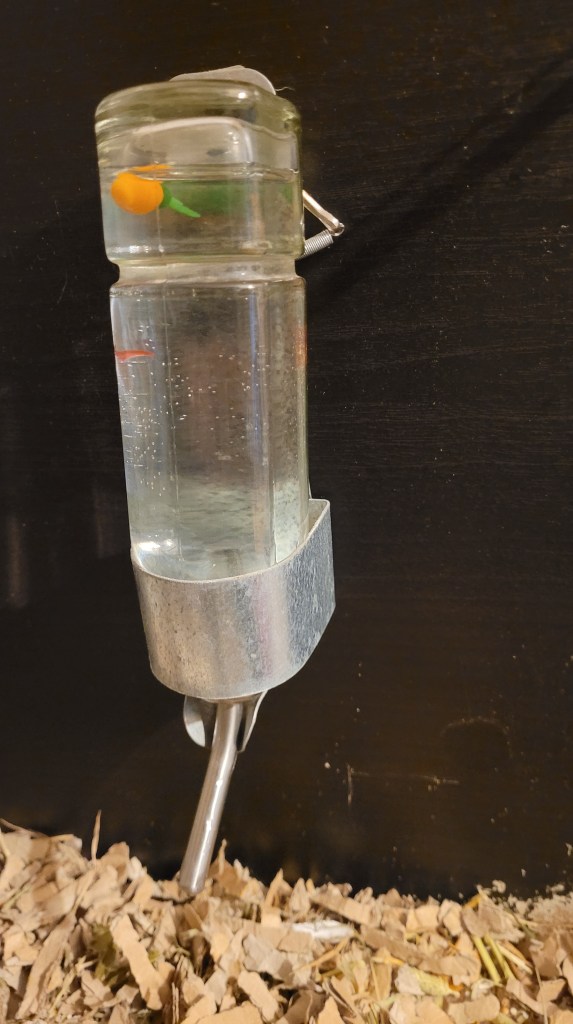
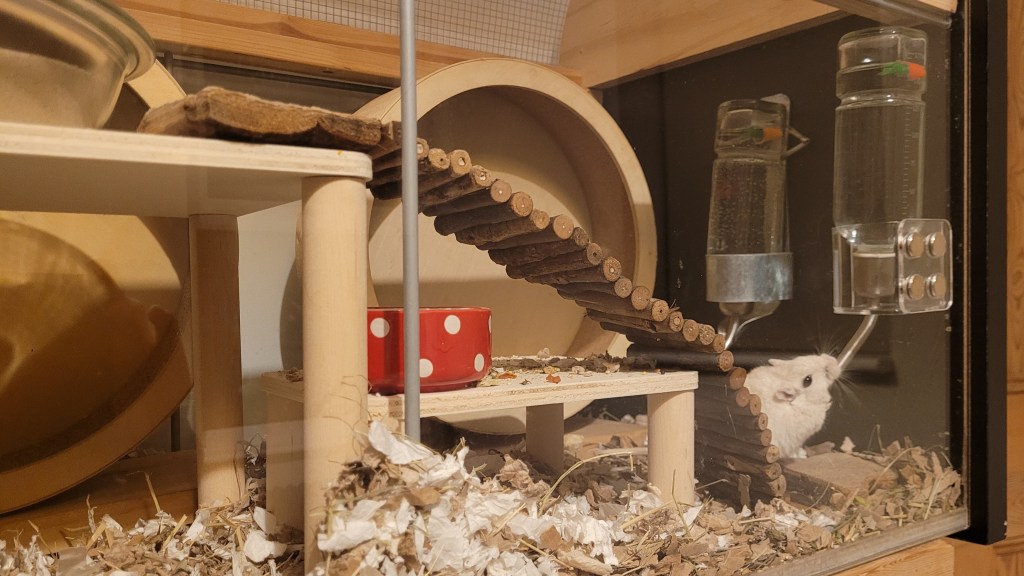
Water Bottles: Gerbils should never have plastic items in their tank, so we recommend a glass water bottle like the 177ml Living World Glass Water Bottle (pictured below) which is chew proof. Always have two water bottles because the ball bearings can get stuck, causing a bottle to fail. Two bottles prevent resource guarding, which is where one Gerbil will claim items as it’s own territory leading to squabbles, fights or one Gerbil unable to access resources.
Magnetic Water Bottle Holders: A common question is, “how do I fix a bottle to the side of a glass tank?” Velcro may work in the short term, but it isn’t a stable long term solution and you do not want to risk your water supply falling off. One of the best solutions are magnetic bottle holders like this one Bucastate Magnetic Water Bottle Holder , which is made from acrylic and fits bottles up to 5cm max in diameter. We’ve tested this with a 177ml Living World Glass Water Bottle which fits at a good angle to dispense the water. It’s very strong and supports a full glass water bottle.
Metal Water Bottle Holders: If you have wooden ends in your tank like the Detolf or the Marrakesh then you can screw the Lixit Metal Water Bottle Holder (US import) or Kaytee Metal Water Bottle Holder 4/8oz into the wood and use a 177ml Living World Glass Water Bottle
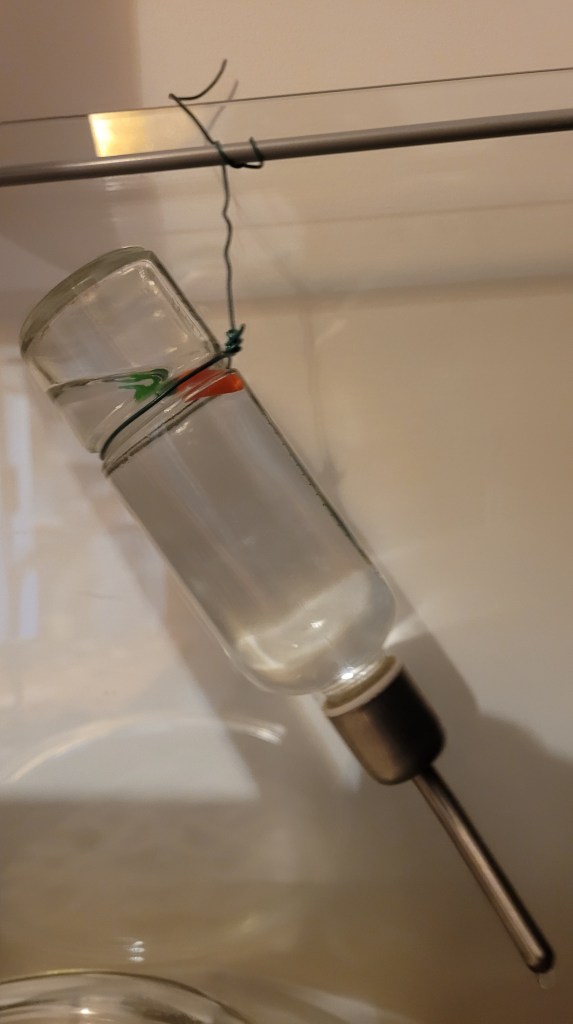
Cheap Garden Wire Holder: If you are on a budget and have metal struts or vents in your tank you could suspend a glass water bottle by wrapping the garden wire around the groove at the base of the bottle and hanging it. The wire will be high up so there is no chance of your Gerbils getting near it. It will be more fiddly to change the water as you’ll need to unwrap the wire from whatever it’s hanging from.
Freestanding Bottle Holder: There are lots of ceramic freestanding bottle holders like the Bucastate Ceramic Water Bottle Holder , but we wouldn’t use the plastic bottle it comes with, so you’d need to replace with a glass bottle to fit, which may reduce it’s stability. You could add sand to the ceramic holder to weight it down so it’s more stable, but as this would need to be raised on a platform anyway, to keep it away from the substrate, it would be simpler to just use a ceramic water bowl.
Paracords: If you’re fixing bottles through the bars of a cage topper, you can use Paracords . In this instance you can use plastic water bottles as the bottles are fixed outside of the tank where Gerbils can’t chew them. We like the Savic Biba Water Bottle 125ml over the Classic Drinking Bottle 150ml as there is a lot less plastic around the metal the spout and it dispenses water well.
Water Bowl: You can also use a water bowl, but make sure a bowl is in an area where Gerbils can’t bring in dirt and bacteria (Gerbils constantly dig and re-arrange their surroundings), and can’t be easily knocked over. Ideally it needs to be on a stand out of the way. A combination of 2 water bottles and a water bowl means your Gerbils will never be without a preferred water source.


 Gerbil Care