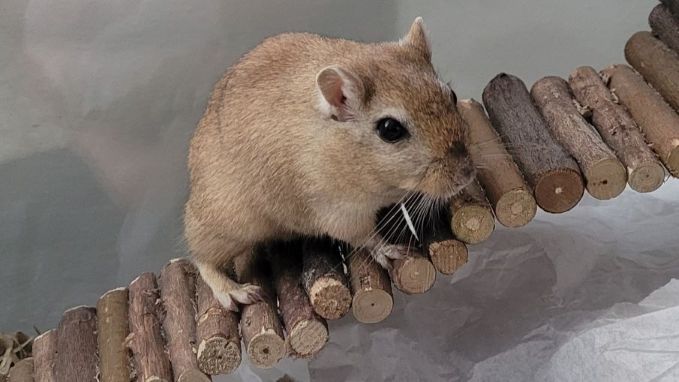
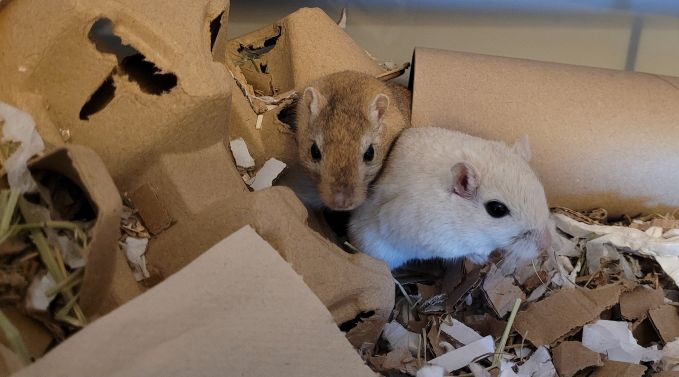
Gerbils are small, desert burrowing rodents. The most common variety kept as a pet is the Mongolian Gerbil. These social animals form incredibly complex bonds and hierarchies in groups known as clans – solitary Gerbils will become depressed, lonely and withdrawn. Gerbils latin name is Meriones Unguiculatus. In Greek mythology, Meriones was the Cretan son of Molus and Melphis or Euippe. You may find inspiration in the links for some mighty Gerbil warrior names.
Are Gerbils the right pet for you?
*Gerbils are small Rodents around 10-12 cm long, with a tail of a further 9-11cm.
*Gerbils originate from the Gobi Desert and Mongolian Steppe
* Gerbils in captivity began in 1935, when 20 pairs were captured in Mandschuria and brought to Japan for breeding. From there, 11 pairs of gerbils were imported into the United States in 1954 and subsequently became popular pets. Gerbils are known for their curious and mild temperament.
*Gerbils average lifespan is between 3 and 4 years.
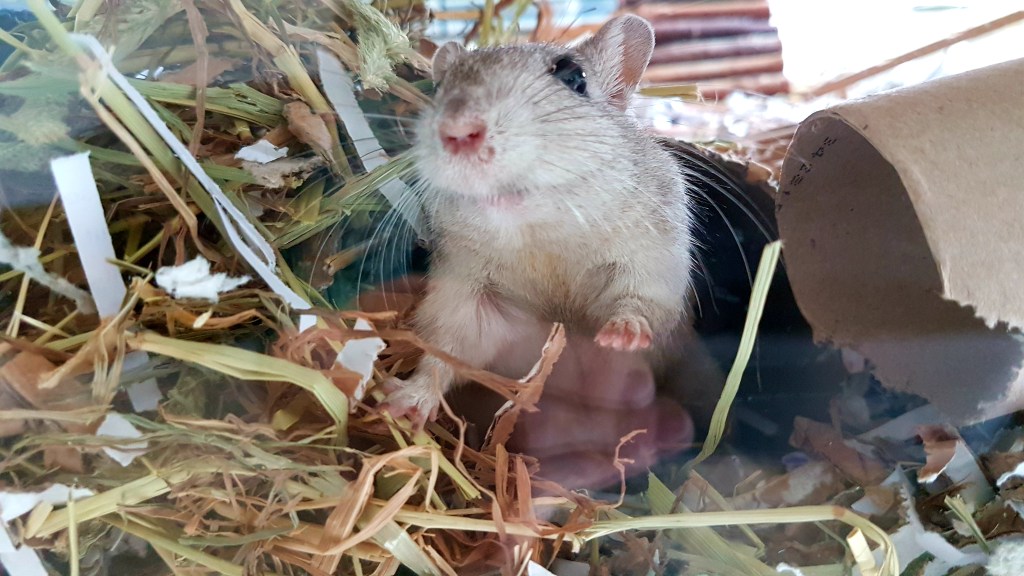
*Gerbils must never be kept alone, they must be kept in groups and pairs. See our Company and Bonding sections for information on how to bond Gerbils, which is something you may have to do during your Gerbil ownership.

*Gerbils can Declan & Fight see our Declanning & Fighting page. This can occur during your Gerbil ownership, they are complex creatures with hierarchal structures, are you prepared for this?
*Gerbils need daily out of tank time in the form of a pen or safe freeroam area. Do you have time for this?
*Gerbils should be housed in large glass tanks. Pet Shops rarely sell anything suitable. Do you have the space? See our Housing section for suitable tanks. The Blue Cross (UK) recommends 100 × 40 × 40 cm (4,000 cm² floorspace) minimum for a pair of gerbils, ideally with a topper and for 3 Gerbils, a tank minimum of 120cm x 40 x 40cm (4,800 cm²floorspace). European German/Swiss welfare standards are 100 × 50 × 50 cm (5,000 cm² floorspace) minimum for two gerbils plus 25% for each extra Gerbil. If you’re looking for a pet that won’t take up much room and will sit neatly in a corner, Gerbils aren’t for you.
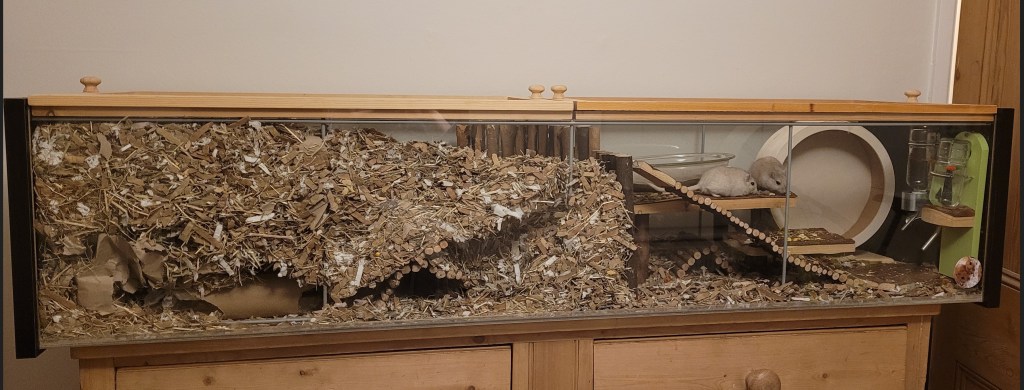
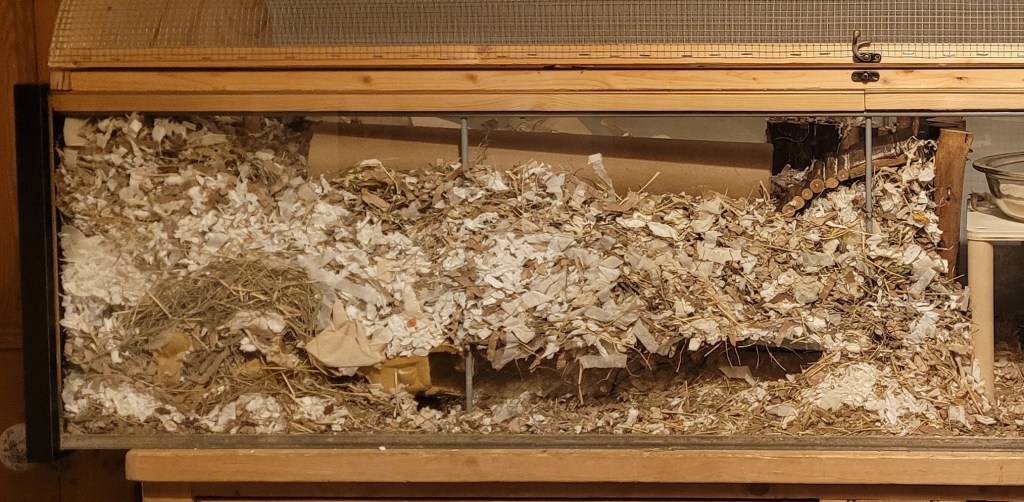
*Gerbils need at least 25cm deep of substrate / bedding in their tank as they are naturally burrowing creatures. See our Substrate, Bedding & Nest Boxes page for details and links about which substrate to choose.
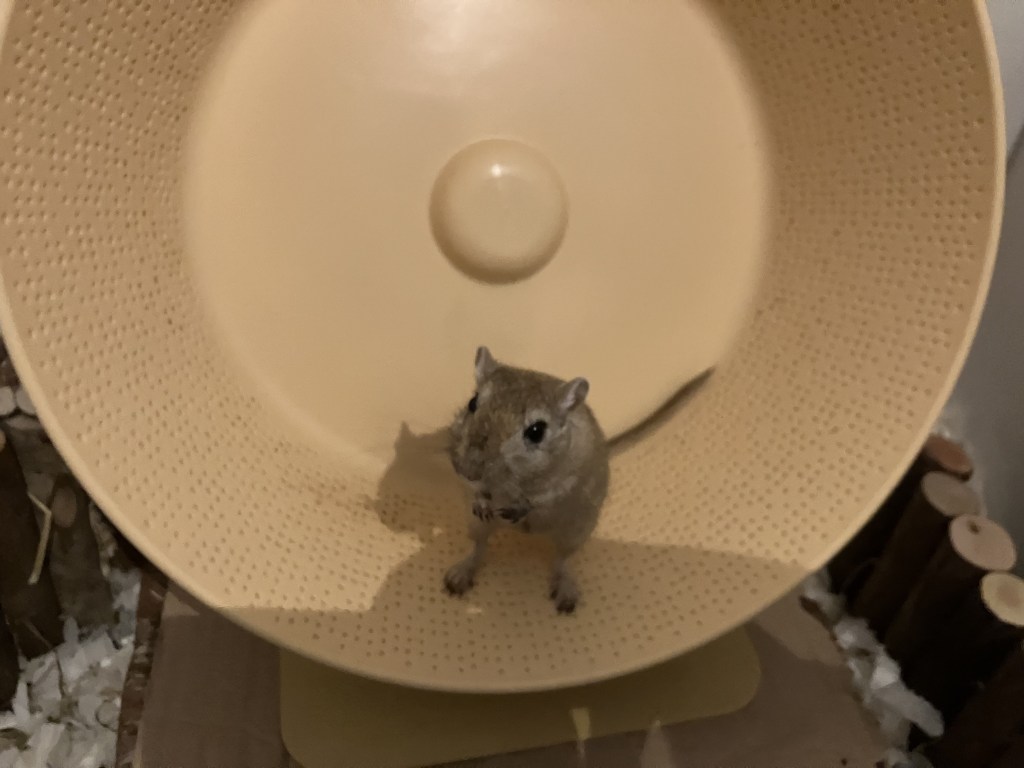
*Gerbils should have an exercise wheel at least 28cm in diameter to allow their back to remain flat and not arched which can cause back damage. See our section Enrichment, Wheels, & Sandbaths for more information
*Gerbils need a sand-bath to keep their coats clean. Avoid sand or “dust” specifically for chinchillas, it’s too fine for Gerbils and can cause respiratory issues, as can any sand made from sepiolite (clay). Generally Reptile sands are best. See our Enrichment, Wheels, & Sandbaths for more information on safe sands.

*Once everything is set up correctly, Gerbils are relatively easy to maintain and due to being desert creatures that urinate infrequently, they are clean and don’t generally smell. You can lose hours watching them dig tunnels, and their inquisitive nature makes them incredibly interactive. See how to set up your Gerbils tank here with photos bottom of page Cleaning & Tank Set-Up
*If looked after correctly Gerbils are generally healthy creatures, but they will, like all pets suffer from health issues, and vets can be expensive. Gerbils are classed as exotic pets, and may require specialist treatment only an Exotic Vet or a Vet with knowledge of rodents, can diagnose and treat. This can easily run into £100’s. Can you afford to give your Gerbils Veterinary care when they need it? Links to vets are here https://gerbilcare.co.uk/uk-vets/
*Sleep patterns in Gerbils mean they are active during the day and night, so don’t be concerned it you see them sleeping a lot. However being crepuscular, means they are more active at the transitions between light and dark.
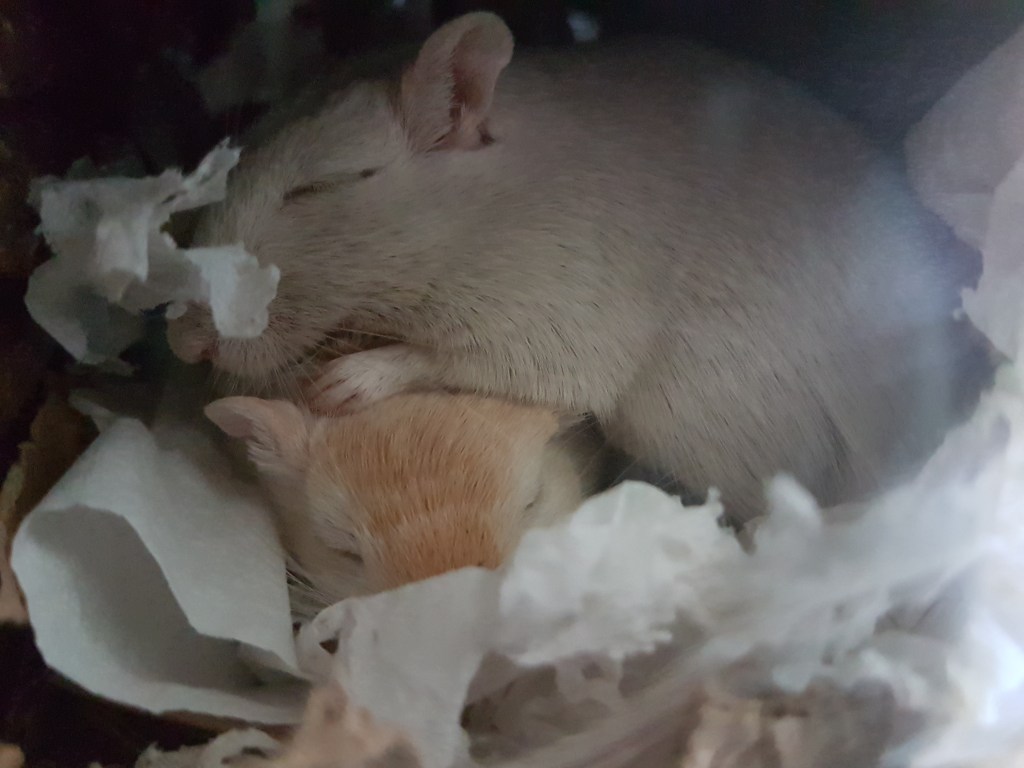
*Being prey animals, many Gerbils don’t generally enjoy being held. They are a watch pet, rather than a cuddle pet. However, with a little patience, Gerbil owners will earn their trust, and they will happily walk into a tube, coconut shell, sand bath or sometimes a hand to be moved around. Gerbils are delicate and fast creatures and for that reason we wouldn’t recommend them as pets for children below 8 years old. See our section here on Handling & Taming
*If you do decide Gerbils are for you, then please adopt, don’t shop. We have a list of UK rescue centres here – Adopt don’t shop, where can I find UK rescue Gerbils?
*Please take the time to read through this website to fully understand the care, space and time Gerbils need and whether you can provide that.
A few Gerbil facts
*Gerbils wink at you when they are happy.
*Gerbils Hearing Range is an unusually low-frequency hearing range (down to ∼200 Hz). Human Hearing range is between 64-23,000hz. Due to the frequency range of TV’s, laptops, fluorescent lights and running water, Gerbils find it distressing and should be housed away from them.
*Gerbil Communication is at frequencies of 500hz – 50,000hz (5 to 50 kHz) and is separated into 13 syllable types. Gerbils communicate at frequencies we can rarely hear, we only hear their lower pitched noises, so they may appear to be quiet, but they are constantly “chatting”.
*You will hear or see your Gerbils Drumming (rhythmic drumming with their back legs). Many Mammals communicate this way and it can be about territorial ownership, competitive superiority, submission, or most commonly in captivity the presence of predators or to warn their clan members. Don’t panic when you see or hear them drumming, it’s completely natural and some Gerbils can be quite dramatic about it!
*If you see your Gerbils rubbing or dragging themselves across items, they are marking their territory with their Scent Gland which is located on their stomach. Take care to check their gland regularly for any changes in size, as Gerbils can form tumours in this area.
*If your Gerbil gives you a series of nibbles (can feel light or sometimes much harder, but not breaking the skin, and repetitive) chances are it’s grooming you, as it would with other Gerbils, and is accepting you into it’s clan. The ultimate compliment!
 Gerbil Care